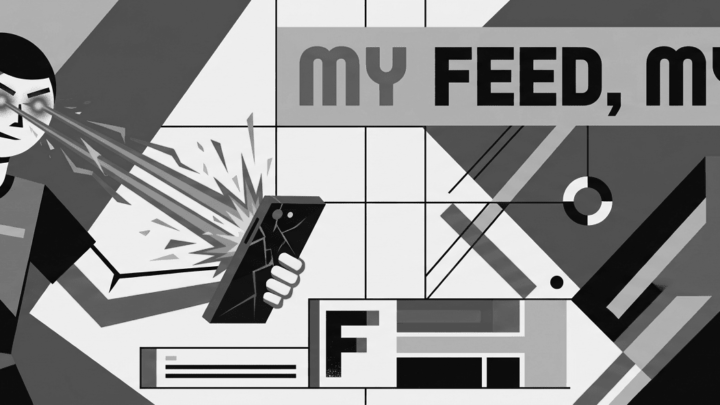

The Dead Internet Theory, once dismissed as an internet-age urban legend, has become a touchstone for activists and digital rights advocates across the EU who are grappling with the rapid transformation of the online world. At its heart, the theory contends that much of the content and engagement on today’s internet is no longer the product of genuine human interaction, but rather the output of bots, AI-generated scripts, and algorithmically curated feeds. This shift, whether the result of deliberate manipulation or the unintended consequence of technological progress, has profound implications for activism, democracy, and the very nature of public discourse in Europe.
The theory’s origins lie in a growing unease about the authenticity of online experiences. Early proponents argued that bots were beginning to outnumber humans on social platforms, generating posts, comments, and even entire conversations that appeared real but were, in fact, artificial. As generative AI has advanced, these concerns have only intensified. Today, sophisticated language models and deepfake technologies can create convincing text, images, and videos at scale, making it increasingly difficult for users to distinguish between what is real and what is synthetic6. The result is an online environment where trust is eroded and genuine grassroots activism faces unprecedented challenges.
For activists in the EU, the consequences are tangible. The proliferation of AI-generated content and automated engagement mechanisms means that authentic messages can be drowned out by artificial noise. Social media campaigns, once a reliable tool for mobilizing support, are now vulnerable to manipulation by bots that can amplify, distort, or suppress activist voices. This is not just a technical issue but a political one: when algorithms prioritize engagement above all else, they often favor sensationalism and misinformation, undermining informed debate and fragmenting communities156. In the context of European democracy, this dynamic poses a direct threat to the open exchange of ideas and the ability of citizens to organize for change.
The economic dimension is equally significant. Much of the internet’s commercial infrastructure now relies on the illusion of engagement, with click farms and bot networks generating fake likes, views, and comments to drive advertising revenue5. This undermines the credibility of online platforms and makes it harder for legitimate activist campaigns to gain traction. Moreover, as trust in digital spaces declines, so too does the willingness of citizens to participate in online petitions, crowdfunding efforts, or public debates. The risk is a vicious cycle in which skepticism breeds disengagement, further marginalizing authentic voices.
Yet, the Dead Internet Theory is not merely a warning—it is also a call to action. Scholars and digital rights advocates argue that the solution lies in reclaiming the internet as a space for genuine human connection and democratic engagement6. This means demanding greater transparency from platforms about how content is generated and curated, pushing for regulatory standards that require clear labeling of AI-generated material, and investing in digital literacy initiatives that empower citizens to critically assess the information they encounter online. For EU activists, it also means building networks of trust, collaborating across borders, and leveraging decentralized technologies that resist algorithmic manipulation.
The intersection of the Dead Internet Theory and democracy is particularly acute in Europe, where the integrity of public debate is foundational to the Union’s values. If bots and algorithms are allowed to dominate online discourse, the risk is not just a loss of authenticity but a weakening of democratic institutions themselves. Activists must therefore see the fight for a “living” internet as inseparable from the broader struggle for democratic rights and freedoms. By advocating for responsible AI governance, supporting open-source and encrypted communication tools, and fostering resilient online communities, activists in the EU can help ensure that the internet remains a vibrant arena for collective action and democratic renewal.
In the end, the Dead Internet Theory challenges us to confront uncomfortable truths about the digital age. But it also offers a roadmap for resistance—one that places human agency, transparency, and solidarity at the center of the fight for the future of the web. For activists in the EU, the task is clear: to keep the internet alive, we must insist on an online world where real people, not machines, set the agenda156.
Citations:
- https://www.unsw.edu.au/newsroom/news/2024/05/-the-dead-internet-theory-makes-eerie-claims-about-an-ai-run-web-the-truth-is-more-sinister
- https://en.wikipedia.org/wiki/Dead_Internet_theory
- https://www.jstor.org/stable/27244117
- https://www.wix.com/blog/dead-internet-theory
- https://builtin.com/articles/the-dead-internet-theory
- https://www.irjweb.com/Dead%20Internet%20Theory%20and%20how%20Generative%20AI%20has%20contributed%20to%20realizing%20it.pdf
- https://www.irrelevantmatters.com/the-end-of-the-human-web-dead-internet-theory/